Search for Pseudanthias cooperi returned 23 results.
-
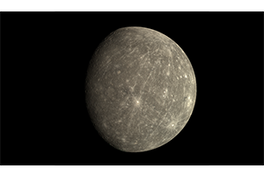
Biodiversity Science project: Mercury Mappers
Help NASA identify craters on Mercury As seen in Chapter 4 of Citizen Science by Caren Cooper.
-
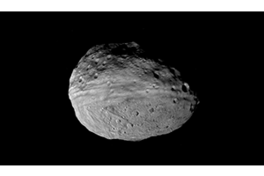
Biodiversity Science project: Asteroid Mappers
Help NASA identify craters and other terrain on the asteroid Vesta As seen in Chapter 4 of Citizen Science by Caren Cooper.
-
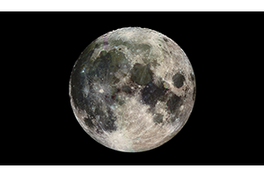
Biodiversity Science project: Moon Mappers
Help NASA identify craters on the Moon As seen in Chapter 4 of Citizen Science by Caren Cooper.
-
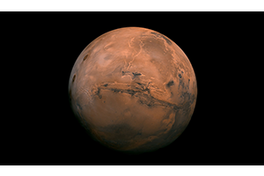
Biodiversity Science project: Mars Mappers
Help NASA identify craters and other terrain on Mars As seen in Chapter 4 of Citizen Science by Caren Cooper.
-
Biodiversity Science project: Patients Like Me
Patients Like Me is an opportunity for patients and medical experts to communication and improve healthcare. Individuals and experts can share and compare experiences such as treatments or symptoms. Individuals track their health, learn more about different treatments, or connect with individuals with similar conditions. As seen in Chapter 10 of Citizen Science by Caren Cooper.

-
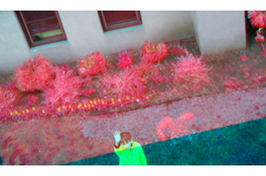
Biodiversity Science project: Public Laboratory Infrared Camera
Infrared photography can help in assessing plant health, and has been used on satellites and planes for agricultural and ecological assessment primarily by vineyards, large farms and large-scale (read: expensive) research projects. By creating and open-sourcing a low-cost near-infrared camera and working with wetlands advocates, farmers and environmental activists, the Public Lab community has begun to explore grassroots uses for this powerful analytic technique...
-
Biodiversity Science project: Folding@home
Help Stanford University scientists studying Alzheimer's, Huntington's, Parkinson's, and many cancers by simply running a piece of software on your computer. The problems we are trying to solve require so many calculations, we ask people to donate their unused computer power to crunch some of the numbers. As seen in Chapter 5 of Citizen Science by Caren Cooper.

-
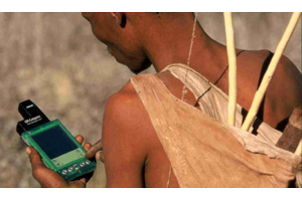
Biodiversity Science project: CyberTracker
CyberTracker Conservation is a non-profit organisation that promotes the vision of a Worldwide Environmental Monitoring Network. Our ultimate vision is that smart phone users worldwide will use CyberTracker to capture observations on a daily basis. CyberTracker is the most efficient method of gps field data collection. You can use CyberTracker on a Smartphone or handheld computer to record any type of observation...
-
Biodiversity Science project: Public Laboratory Balloon and Kite Mapping
This DIY mapping tool was the first developed by Public Lab, as part of the Grassroots Mapping project. Citizens use helium-filled balloons and digital cameras to generate high resolution “satellite” maps of areas such as in the Gulf Coast and Gowanus Canal. Although this tool has been in use for two years, components of the kit -- kite and balloon design, the rig, the camera -- continue to evolve as they are adopted in new places and adapted for new purposes...

-
Biodiversity Science project: eBird
A real-time, online checklist program, eBird has revolutionized the way that the birding community reports and accesses information about birds. Launched in 2002 by the Cornell Lab of Ornithology and National Audubon Society, eBird provides rich data sources for basic information on bird abundance and distribution at a variety of spatial and temporal scales. The observations of each participant join those of others in an international network of eBird users...